

Overview
Acoustic Foam
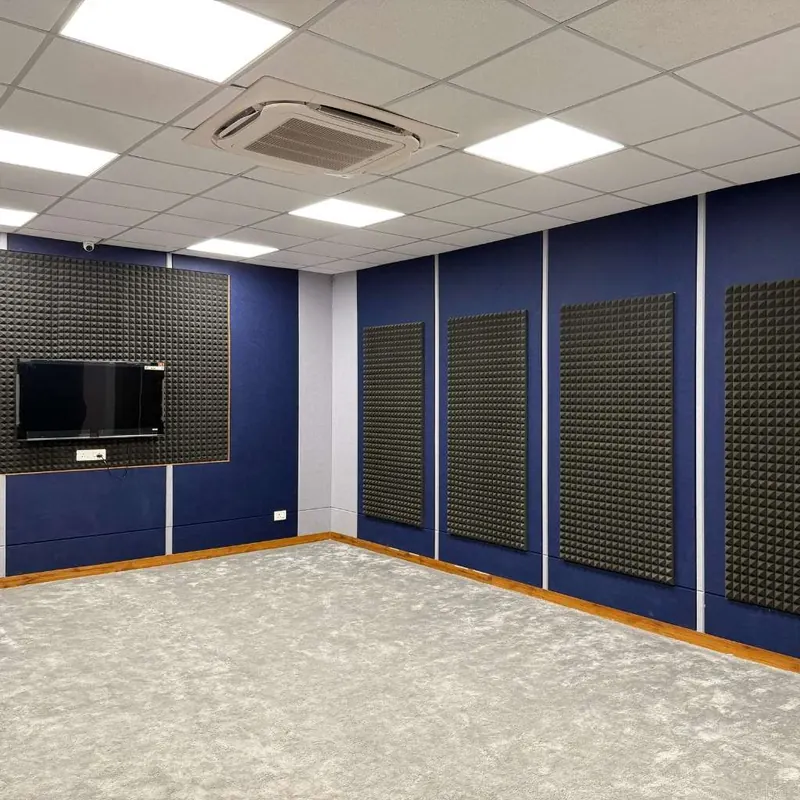
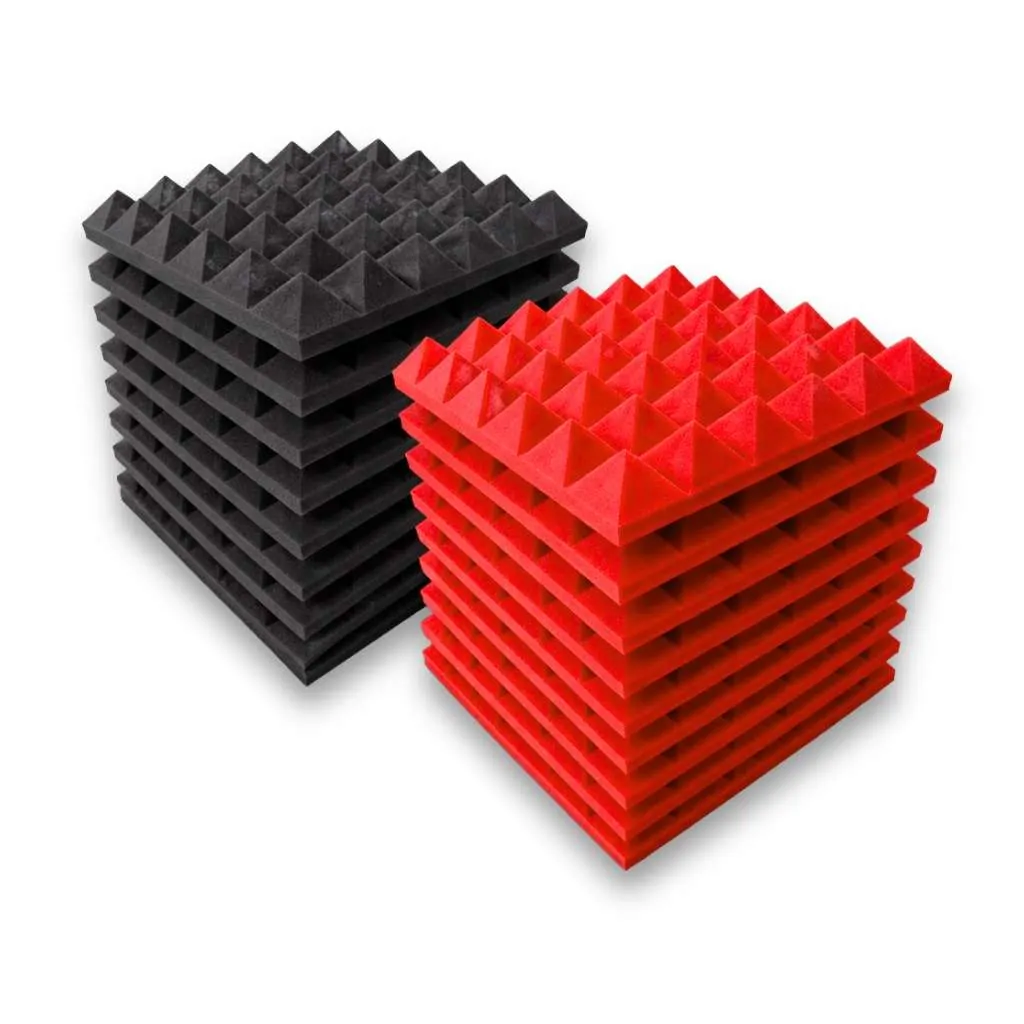
Open-cell polyurethane foam cut into a field of pyramids or as parallel wedges at 50 mm, reaching an NRC of up to 0.9. The profile increases surface area and gives the wave a graded entry into the material instead of a hard face.
Foam is the standard answer inside a small critical-listening room — a vocal booth, a control room, a podcast studio — where the distances are short and the reflections arrive early enough to smear what you are hearing.
Wedge and pyramid share the same specification and perform the same on paper. Choose on appearance and on how the tiles will be laid out, not on the datasheet. The wedge profile is directional, so orienting alternate tiles at ninety degrees evens out the response across the wall.
It is not a soundproofing material. Foam on the wall will not stop your neighbour hearing the mix; that is a job for mass and isolation. Foam changes how the room sounds from the inside.
Supplied in 305 × 305 mm and 610 × 610 mm tiles. The smaller tile is easier to work around switches and sockets; the larger one goes up faster on a clear wall.
Typical applications
- Recording studios
- Vocal booths
- Podcast rooms
- Control rooms
- Rehearsal rooms
- Editing suites
- Home studios
Technical information
Specification
Figures as published by Silence Acoustic. We confirm them against your specification and supply test reports on request.
| Item | Polyurethane acoustic foam |
|---|---|
| Shape | Pyramid & Wedge |
| Tile size | 305 × 305 mm & 610 × 610 mm |
| Thickness | 50 mm |
| NRC | up to 0.9 |
| Cell size | 77 PPI |
| Density | 23 kg/cm³ (as published) |
| Tensile strength | 0.97 kg/cm² |
| Elongation | 135% |